
Does the family work for the business, or the business for the family?
I was across the table from someone I’d trusted as an advisor. I’d come with a real question about the business. His answer was the kind of thing that makes you smile, nod, and then sit in your car for ten minutes afterward wondering if you heard him right. The gist of it: optimize the family’s take.
I was kind of shocked that the advisor was so off the mark. But then I realized a family business that is seeking to transcend generations is very different from most businesses.
I drove home that night from my meeting with the advisor asking myself the question I come back to once a year: "Does the family work for the business or does the business work for the family?"
Most people don’t get it. (This advisor didn’t get it.)
When you align your actions to a structure where the family works for the business, you're operating upside down from how most of the world thinks about ownership. That's the point.
This upside down structure leads to playing a long-term game with long-term people. (A talent magnet.)
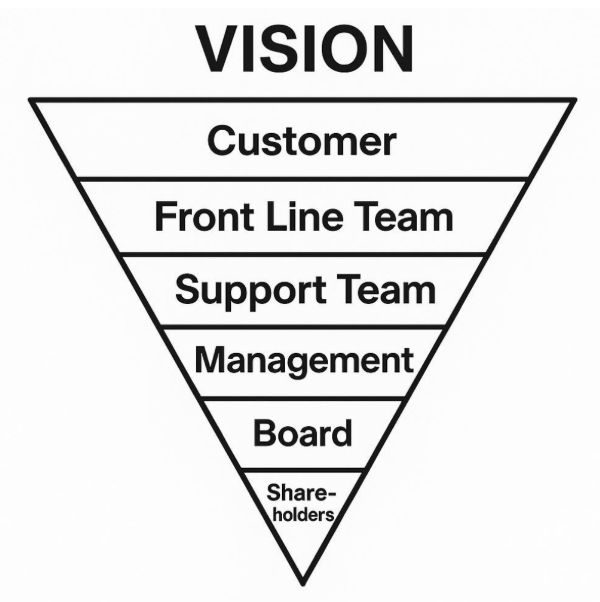
This is the beauty and greatest challenge in family business to keep this intent in place.
But this structure is hard to maintain over time.
Success breeds complacency. The structure can drift toward becoming just another financial instrument.
The flip to where the business works for the family (i.e., shareholders) is all too common.
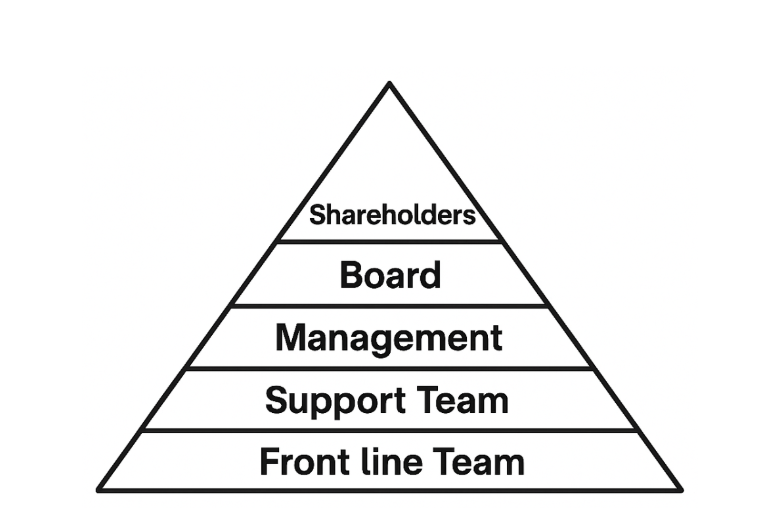
I've seen family businesses go from one generation to the next where it flips from the special structure to the ordinary structure.
When the structure changes the narrative changes:
SPECIAL: “How can I help?” (“How can I best serve this organization for all stakeholders?”)
The passionate journey where all stakeholders are building to build knowing the outcomes will come.
ORDINARY: “What’s my ROI?” (“Where's my dividend?”)
An ordinary financial instrument where everyone is building for the exit.
The typical structure cannot compete long-term with companies that think beyond the financial instrument and play the game with passion.
The autonomy to play a long-term game without the squeeze for only a few people to win is the beauty of family business.
Mediocrity is invisible. Passion exposes it.
The world needs more businesses structured to truly serve.
Because when people feel the difference between “How can I help?” and “What’s my ROI?” — they give you more than their hands.
They give you their hearts.
Onward,
Matt
P.S. Legacy isn't an accident. It's a discipline.