
If it grows like a weed, it probably is a weed
I had lunch last week with the CEO of a great bank. Mid-conversation, between bites, he said something that has not left me:
"If it grows like a weed, it probably is a weed."
Wall Street worships growth. The narrative bleeds onto Main Street. The faster, the better. Unicorns are the gold standard.
But Main Street has a different option. Durability.
We don't need supersonic speed. Nature suggests too fast is rarely healthy. We are not weeds. We are redwoods. Redwoods grow on a different clock: decades that compound into centuries.
That is a different kind of growth. Patient. Sustainable. Sovereign.
It also requires a different kind of fuel.
Before we get to the fuel, we have to name the three forces pulling on every multigenerational family business. (Financial firms don't have to balance these. They have an exit coming.)
Growth. Liquidity. Control.
These three don't play well together. The tradeoffs are real.
Growth.
There is no standing still. You are going forward or you are going backward. Capital expenditures are the backbone: cash out the door, into tools, land, equipment.
Growth gives great people somewhere to go.
If you are hoarding cash for the ownership group or coasting on yesterday's wins, top talent will not stay long. They did not sign up to manage decline.
A talent drain is the loudest alarm a family business can hear. Jim Collins put it best: First Who, Then What. Great family businesses always have great people, because growth gives those people room to build.
Growth, for us, is not about lining shareholder pockets for the exit. It is about building a gathering hall for the best people in our industry and creating real impact in the communities we serve.
Control.
A family business is marked by its spirit. Remaining closely held requires discipline in holding onto the appropriate amount of ownership.
The spirit cannot survive a fractured ownership structure.
Lose control of the ownership structure, and you eventually lose control of the values. The two are not separate decisions.
Liquidity.
Cash is king. A family business can be forced into a majority sale by a single minority shareholder asking for liquidity.
Cash provides options. Cash provides safety. Cash provides durability.
Berkshire has been the loudest example of this for half a century. Berkshire is currently sitting on over $300 billion in cash. Liquidity is what lets you stand calm while the market is panicking.
Buffett's line still rings: "Be fearful when others are greedy. Be greedy when others are fearful."
You can only do that if your powder is dry.
Three forces. Three fuels.
Think of the gas station. Regular, Plus, Premium. Each comes with a different cost. For a family business that wants to keep control of its destiny, here is the order of preference:
1. Retained earnings. The slowest fuel, and the most sovereign. Every dollar reinvested is a dollar that does not borrow your future against your present.
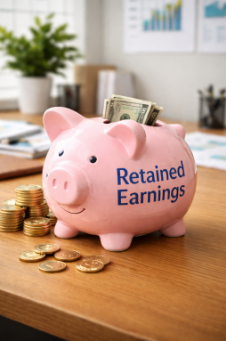
Patience is the price. It is not sexy. It is rooted in operational excellence.
It is the redwood approach.
2. Bank debt. Useful, but never free. Take on debt and you give up some control: to covenants, to balance-sheet requirements, to a phone call you did not ask for.

The trade can be worth it. Just go in eyes wide open. The more leverage you carry, the more perfect you have to be when the marketplace turns rocky.
Munger, as always, said it best: "Avoid liquor, ladies, and leverage."
He was not kidding about the third.
3. Equity "partner." The hitchhiker with a credit card.

You let them in the car because of the case studies. They show you how helpful they have been to others. They offer free gas for a year.
Then they grab the steering wheel.
Yes, I am being hyperbolic. Mostly.
But what I am watching in the marketplace right now is sobering. Most leveraged-buyout firms are financial instruments built for a defined time horizon. Their game is not our game. Their motives are not our motives. Their clock is expedited.
A trusted minority equity partner, used surgically, can be a real tool. I have heard the success stories. I have heard the horror stories. Choose carefully.
The hitchhiker who promises to help you "take some chips off the table" or offers you a "second bite at the apple" is rarely promising what you think.
That language signals one thing to me: growth at all costs, a liquidity event in five years, and control passed to the next LBO firm in line.
Here is the test:
Does this fuel buy us more years, or fewer?
Retained earnings buys decades. The wrong equity partner buys you a runway you did not realize was someone else's airport.
Stewardship is choosing the right fuel to move forward. It is tolerating less speed in exchange for more sovereignty. It is understanding that the redwood compounds over centuries, some years fast, some years slow.
Staying in the game is the whole point.
The day of reckoning is coming for every ownership group. The ones who named the three forces: growth, liquidity, control. These are the ones who get to wrestle with the tradeoffs on their own terms.
The ones who did not name them get pushed.
Onward,
Matt
P.S. Weeds bolt. Redwoods endure. The fuel you pick decides which one you become.