The room I couldn't remember (Board Room)
The summer before my sophomore year of college, my mom took me to JC Penney to buy my first big-boy suit.
She found a screaming deal. Buy one, get one free.
I picked the charcoal silver for my first board meeting. I was invited by my grandfather to sit in the corner and listen.
A silent visitor.
I remember the suit.
I don't remember a single word that was said at the meeting.
That was late May. The next day the suit was hanging in my grandparents' closet and I was pulling on work boots to spend the summer in the field, earning gas money for the fall.
(Fun fact: many of the crew I worked beside that summer, I still get to work beside today. Twenty years later.)
I remember those guys. I remember the projects.
I just don't remember the board meeting.
Over the past few weeks we've been laying the foundation for a family business built to transcend generations. The family room. The owner room.
Today we walk into the board room.
And here is what college me could not see:
The room I found forgettable is the room that does some of the most important work to stand a generation or two from now.
Those independent directors I met that day (the ones whose names I couldn't have repeated a week later) became some of the people most instrumental in helping our family do the hard work of transitioning generations.
At their best, independent directors are trusted advisers to the family. Their job is to make sure the business serves the values and the vision of the owners.
In our case, they helped build structure for the three handoffs most families fumble:
Operational succession (a new president).Board succession (new directors).Owner succession (a new generation).
"Without counsel plans fail, but with many advisers they succeed." (Proverbs 15:22, ESV)
It has taken many advisers to carry our family across generations and stay a thriving business. A family cannot do it alone. There are too many blind spots, too many chances to fumble the ball, for anyone to go it alone. I try to pack the board room with as much wisdom as possible.
The board room should always have the lights on. (Many family business owners don’t want the hassle of boards telling them what to do.)
Charlie Munger's definition of wisdom is my favorite: wisdom is prevention. The best solutions are the ones where you never have the problem in the first place.
Which is exactly why I couldn't remember that meeting.
Nothing went wrong.
The suit was the only thing I could see. The prevention was invisible.
Here is what I've watched good directors do from the inside:
They act as agents of the owners. (listen and gain compassion for owners)
They make decisions on behalf of all owners, majority and minority alike. (We talked last week about the natural tension in the owner room. This is where it gets held.)
Their closest relationship is with the owners, not with operations.
They discern the right results for the right people. Call these the "Ends."
And they leave the CEO to accomplish those Ends with the resources and the "means."
That last one is where I've seen the most damage.
I've watched firsthand the chaos of board members failing to stay in the board room and walking into the operations room when they have no business in that room.
Just as their needs to be trust from the family room to the owner room. There must be trust from the owner room to the board room.
A high functioning board needs owners to trust the board..
To trust the board to hear their hopes, and then to trust the board to set the policies that turn those hopes into results.
A board can only be your agent if you actually let it act like one.
The hardest part of the board room is never building it.
It is choosing to trust it and living into it being part of the family system.
Onward,
Matt
P.S. When I came into town for the board meeting many years ago, I traded the charcoal silver for boots and drove out to the field the next day. I didn't know it yet, but I'd just stepped out of one room and into another. Next week, the fourth room: operations.
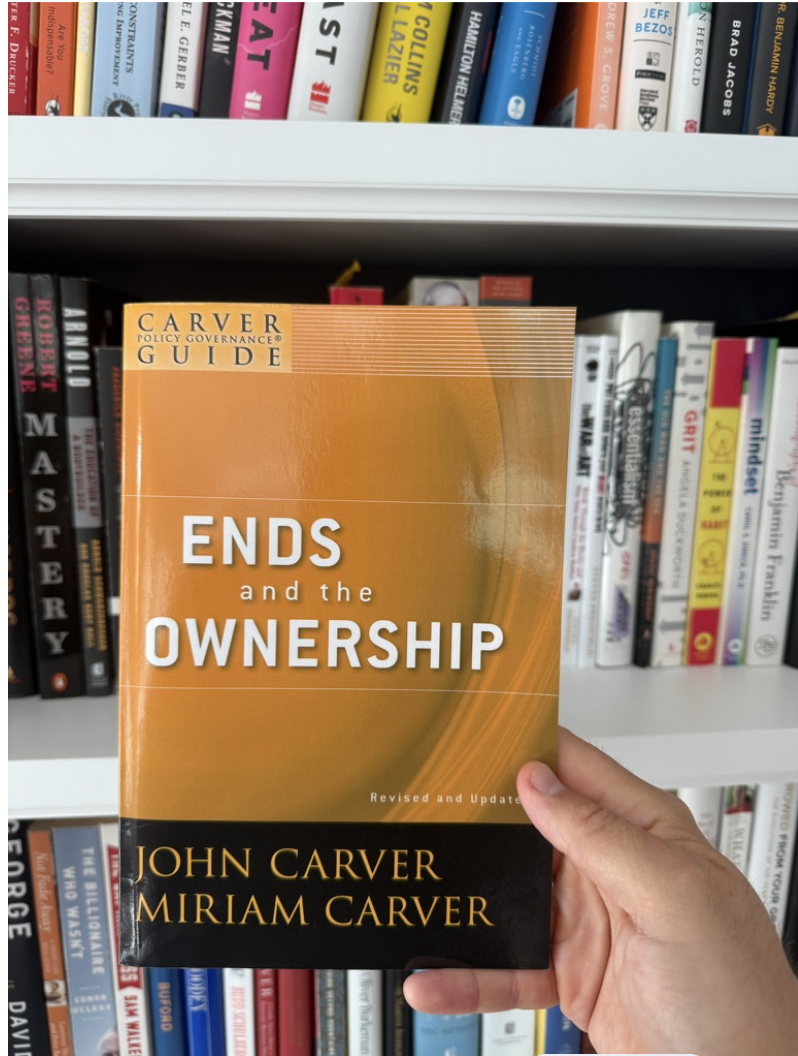
P.P.S. The best book I’ve read on governance with very simple methodology that I reference above: End and the Ownership.